
Protecting Property Line Markers During Curb and Utility Work
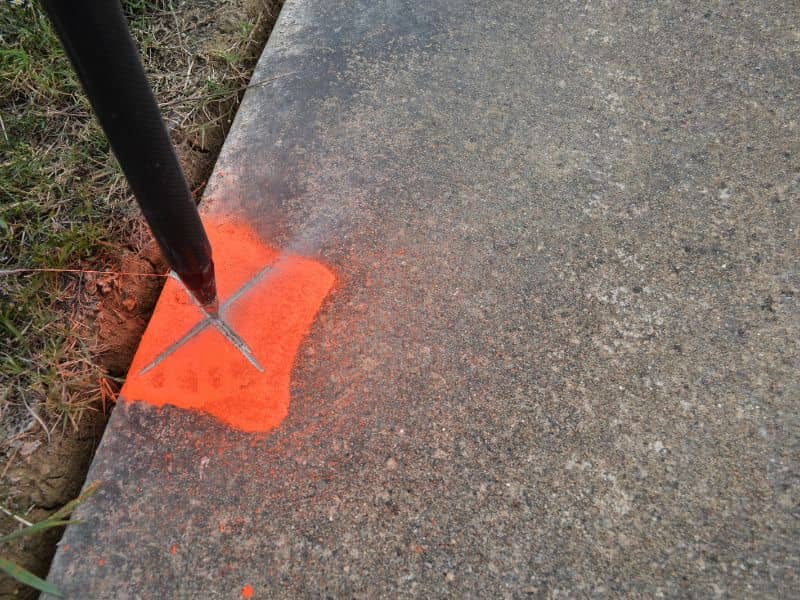
A single pass with an excavator can wipe out a boundary marker that sat undisturbed for decades. Curb replacement, sidewalk rebuilds, and utility trenches all happen right where many front property corners are found. Once a marker is pulled or shifted, the proof of where your line sits can go with it.
The good news is that most of this damage can be prevented with a little planning. Property owners who locate their property line markers, record them, and talk with the crew before digging starts are in a much stronger position. If a marker does get disturbed, a licensed surveyor can reset it based on the records and nearby evidence.
Why Curb Replacement and Utility Excavation Can Disturb Property Line Markers
That location puts them in harm’s way. Curb crews saw, broke, and hauled out old concrete along the street edge. Utility crews trench along frontages to replace water, sewer, gas, or fiber lines, and a pin buried a few inches below the surface rarely survives a bucket.
Some markers aren’t destroyed outright. They get bent, knocked a few inches off position, or buried under new fill and concrete. A shifted marker can be worse than a missing one, because it looks correct and may mislead the next person who relies on it.
Identifying Boundary Monuments Before Construction Work Begins
The best time to find your boundary monuments is before any equipment shows up. Start with your most recent survey plat, if you have one. It should show which corners were found or set and what kind of marker was used.
Then check the ground. Look near sidewalk edges, driveway aprons, and the back of the curb for metal caps or concrete posts. A basic metal detector can help locate buried pins, but be careful not to dig them out or move them while searching.
If you can’t find your markers or you don’t have a survey, call a licensed surveyor early. A surveyor can locate existing monuments and set reference points, called witness marks or ties, at safe distances from the work zone. These references let the corner be checked or restored later even if the original marker is lost.
Coordinating Survey Marker Protection With Contractors and Utility Crews
Clear communication prevents most marker damage. Talk with the contractor or project contact before work starts and point out each marker you know about. Ask whether the work limits come close to those spots.
A few simple steps help crews avoid damage:
- Flag each marker with a lath, stake, or bright paint so it’s easy to see
- Share a copy of your survey plat with the project contact
- Ask the crew to tell you before they remove concrete near a marked corner
- Keep a phone number for someone on the job who can answer questions
Utility locate services mark buried lines, but they don’t mark property corners. That’s a separate job, and it falls on the owner or the project team to flag boundary markers. For public street projects, the city or agency may have its own process for protecting or replacing monuments, and those rules can vary by municipality and project scope. Ask the project contact how they handle markers inside the work area.
Documenting Property Line Markers Before and After Excavation
Good records make it far easier to prove a marker was disturbed. Before work begins, take clear photos of each marker. Include a wide shot that shows nearby features like the driveway, a tree, or a utility box, and a close shot of the marker itself.
Measure from each marker to two or three fixed objects that won’t be touched, such as a building corner or a fence post set well back from the street. Write the distances down and date your notes. These simple ties can help a surveyor confirm whether a marker moved.
After the work is done, return to each spot and take the same photos and measurements. Compare them side by side. If a marker is missing, tilted, or sitting in a new spot, contact the contractor or project contact in writing and keep a copy of your message.
When a Licensed Surveyor Should Reestablish Disturbed Boundary Markers
A marker should be reset by a licensed surveyor whenever it has been removed, moved, or buried in a way that makes its position uncertain. Owners and contractors shouldn’t put a pin back by eye, even with good intentions. A marker reset in the wrong place can cause boundary problems for years.
The surveyor will use your plat, recorded documents, nearby monuments, and any ties set before construction. From that evidence, they’ll restore the corner to its correct position and note the work on a new or updated record. Some surveyors set a new marker with a cap that shows their license number.
Who pays for the reset can depend on the contract, the agency, and local rules, so ask before work begins. If you’re selling, refinancing, building a fence, or planning an addition, get disturbed markers restored early. A missing corner can slow down a closing or a permit review.
Frequently Asked Questions
Can I put a disturbed property marker back myself?
You shouldn’t try to reset a property marker on your own. Even a small error can shift your line and create a dispute later. Rules about who may set boundary monuments can vary by state. A licensed surveyor is the right person to restore it.
Do utility locate services mark property corners?
No, utility locate services only mark buried lines like gas, water, and electric. They don’t search for or flag boundary markers. Property owners or project teams need to handle that separately. A surveyor can help if you’re unsure where your corners are.
Who pays to replace a marker damaged during street work?
That depends on the project, the contract, and local rules. Some public projects include monument replacement in their scope. Others leave it to the property owner to raise the issue. Ask the project contact before work starts and keep your request in writing.
How can I tell if a property marker has moved?
Compare its position with photos and measurements taken before construction. A bent pin, cracked monument, or fresh soil around it can be warning signs. A marker can also look fine and still be off by a few inches. A surveyor can measure it against records and confirm its position.
What are witness marks?
Witness marks are reference points set a known distance from a boundary corner. Surveyors place them where they’re less likely to be disturbed. If the main marker is lost, the witness marks help restore it. They’re a smart step before any major work near a property line.
